What is Lead Generation? A Beginner's Guide to Generating Quality Leads
New to lead generation? This beginner's guide breaks down what lead generation means, how it works, and how businesses can build a steady pipeline of quality leads — not just contacts.
What is Lead Generation? A Beginner's Guide to Generating
Quality Leads
If you run a solar installation business or an EPC company,
you already know the hardest part isn't installing panels — it's finding the
right homeowners and businesses who are actually ready to go solar. That's
where lead generation comes in.
In this guide, we'll break down what lead generation really
means, how it works step by step, and how solar businesses can use it to build
a steady pipeline of serious buyers instead of chasing cold contacts.
What is Lead Generation?
Lead
generation is the process of attracting potential customers and capturing
their interest in your product or service, usually by collecting their contact
details such as name, phone number, or email address. Once someone shares this
information, they move from being an anonymous website visitor to a
"lead" — a real person your sales team can follow up with.
The goal isn't just to collect names. It's to identify
people who have a genuine need for what you offer, nurture that interest over
time, and guide them toward a purchase decision. For a solar business, this
could mean turning a homeowner researching "solar panel cost in
India" into someone requesting a free site survey.
The Three Types of Leads
Not every lead is equally valuable. Broadly, leads fall into
three categories:
- Qualified
leads – These prospects have shown real interest and fit your ideal
customer profile (for example, a homeowner with a suitable rooftop and
budget for solar installation).
- Warm
leads – They've engaged with your content or ads but haven't confirmed
intent yet. Sales needs to follow up to qualify them further.
- Unqualified
leads – These don't match your target audience closely enough to
convert, even after outreach.
Understanding this difference helps your team spend time on
the right prospects instead of spreading effort thin.
How Does Lead Generation Work?
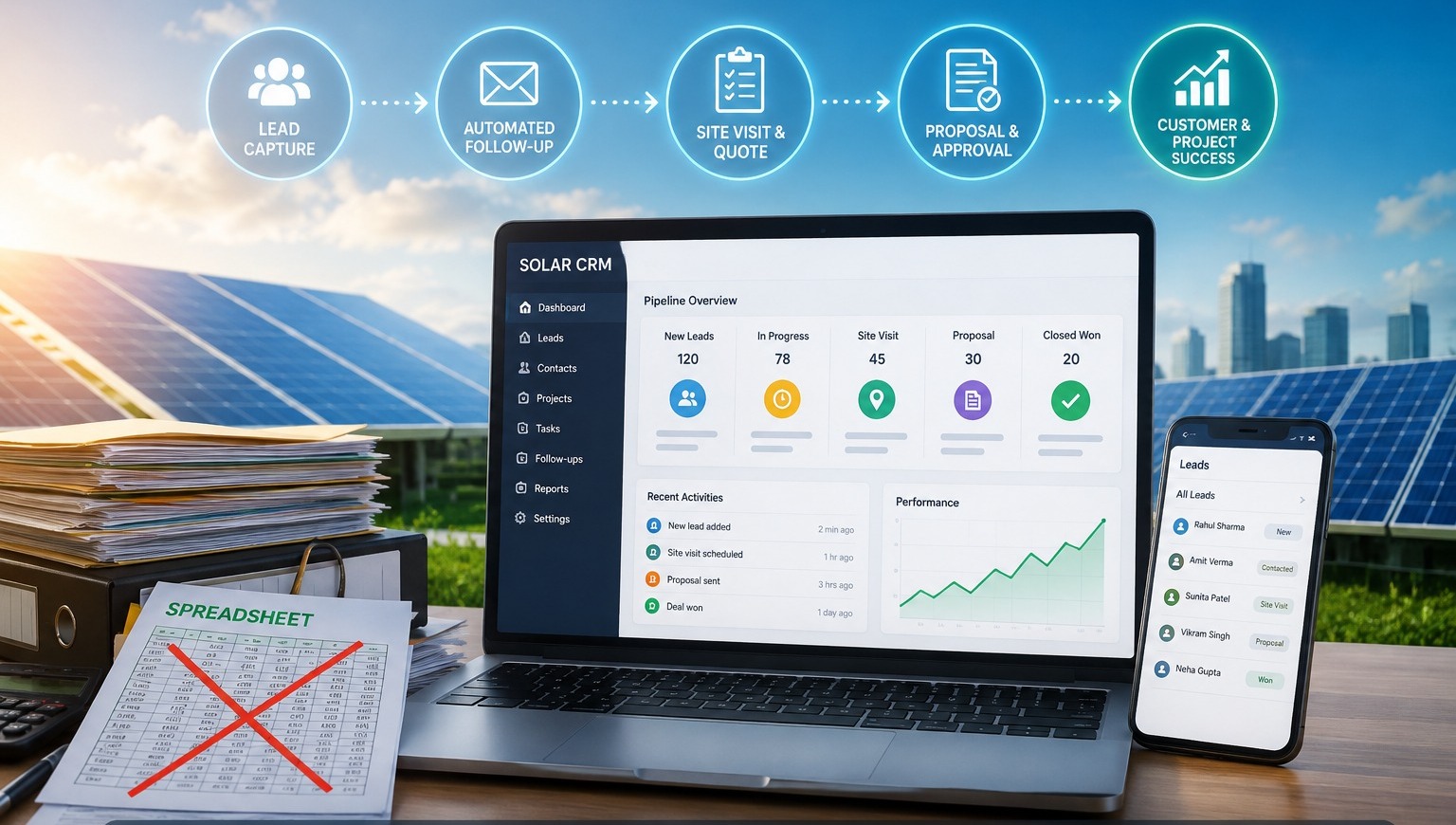
Lead generation typically follows four stages:
1. Attracting your audience. You draw potential
customers in through blog content, SEO, social media, or paid ads. A solar EPC
company might publish content around subsidy schemes, payback periods, or
maintenance tips — topics their audience is actively searching for.
2. Capturing information. Once someone is interested,
you offer something valuable in exchange for their contact details — a free
solar savings calculator, a downloadable subsidy guide, or a callback request
form on a landing page.
3. Nurturing the lead. Not every lead converts
immediately. Email follow-ups, WhatsApp updates, case studies, and personalized
content keep your business top-of-mind until the prospect is ready to act.
4. Converting to a customer. This is where your sales
team steps in with site visits, quotations, and consultations to close the
deal.
Inbound vs Outbound Lead Generation
There are two broad approaches to generating leads:
Inbound lead generation relies on pulling prospects
toward you through valuable content — blog posts, SEO-optimized pages, social
media, and email marketing. It builds trust before the sales conversation even
starts, which matters a lot for high-consideration purchases like solar
installation.
Outbound lead generation involves reaching out
directly — cold calling, direct outreach, or paid advertising. It can generate
faster results but usually costs more per lead and requires stronger initial
trust-building.
Most successful solar and B2B companies use a mix of both,
leaning more on inbound content over time as it becomes a lasting source of
organic traffic and leads.
Why Lead Generation Matters for Solar and EPC Businesses
Solar is a considered purchase — customers rarely decide on
day one. They compare vendors, check subsidy eligibility, calculate ROI, and
read reviews before requesting a quote. A structured lead generation system
helps you:
- Reach homeowners and businesses actively researching solar solutions
- Build trust through educational content before the sales pitch
- Filter out unqualified enquiries and focus sales effort on serious buyers
- Create a predictable, measurable pipeline instead of relying on referrals alone
This is exactly the gap platforms like Sambhavpro are built to close — connecting
solar installers and EPC companies with verified, high-intent leads so sales teams
spend less time chasing and more time closing.
Key Lead Generation Metrics to Track
To know if your lead generation efforts are working, keep an
eye on:
- Conversion
rate – the percentage of leads that turn into paying customers
- Cost
per lead (CPL) – total spend divided by leads generated
- Lead
quality – how well leads match your ideal customer profile
- Return
on investment (ROI)
– revenue generated compared to what you spent acquiring the leads
Tracking these numbers regularly tells you which channels
and content are actually worth your budget.
Best Practices for Generating Quality Leads
Create content around real buyer questions. Instead
of generic posts, answer what your audience is actually searching — subsidy
amounts, installation timelines, panel warranties, and cost comparisons.
Use clear, low-friction lead capture forms. Long
forms scare people away. Ask only for what you genuinely need at this stage —
name, contact number, and location is often enough to start.
Score and qualify your leads. Not every enquiry
deserves the same follow-up speed. Prioritize leads that show stronger buying
signals, like requesting a site visit or downloading a detailed quote.
Nurture before you pitch. A homeowner who just
started researching solar isn't ready for a sales call. Send them useful
information first — savings calculators, case studies, government scheme
updates — and let interest build naturally.
Test and refine continuously. A/B test your landing
pages, CTAs, and follow-up messaging. Small changes in wording or form design
often move conversion rates significantly.
Common Lead Generation Channels
- SEO
and content marketing – ranking for searches like "solar
installation cost Pune" brings in people already looking to buy
- Social
media – LinkedIn works well for B2B and EPC outreach; Instagram and
Facebook help reach residential homeowners
- Email
marketing – nurtures leads who aren't ready to buy immediately
- Referral
and partner programs – existing customers and vendor networks often
bring in some of the highest-quality leads
- Lead
marketplaces and platforms – purpose-built platforms that connect
installers with pre-qualified buyers, saving the time and cost of building
an audience from scratch
Final Thoughts
Lead generation isn't about collecting as many names as
possible — it's about consistently connecting with the right people at the
right time in their buying journey. For solar installers and EPC companies,
that means combining useful content, smart qualification, and the right
platforms to turn interest into installations.
If you're looking to skip the guesswork and connect directly
with verified solar leads, explore
how Sambhavpro helps installers and EPC companies grow their pipeline.
SambhavPro Team
SambhavPro Team